
Editorial Research Index
Institutional briefings & primary regulatory analysis
Financial analysis and briefings published by Institutional Ledger.
- Published briefings
- 231
- Thematic pillar hubs
- 25
20 matching briefings
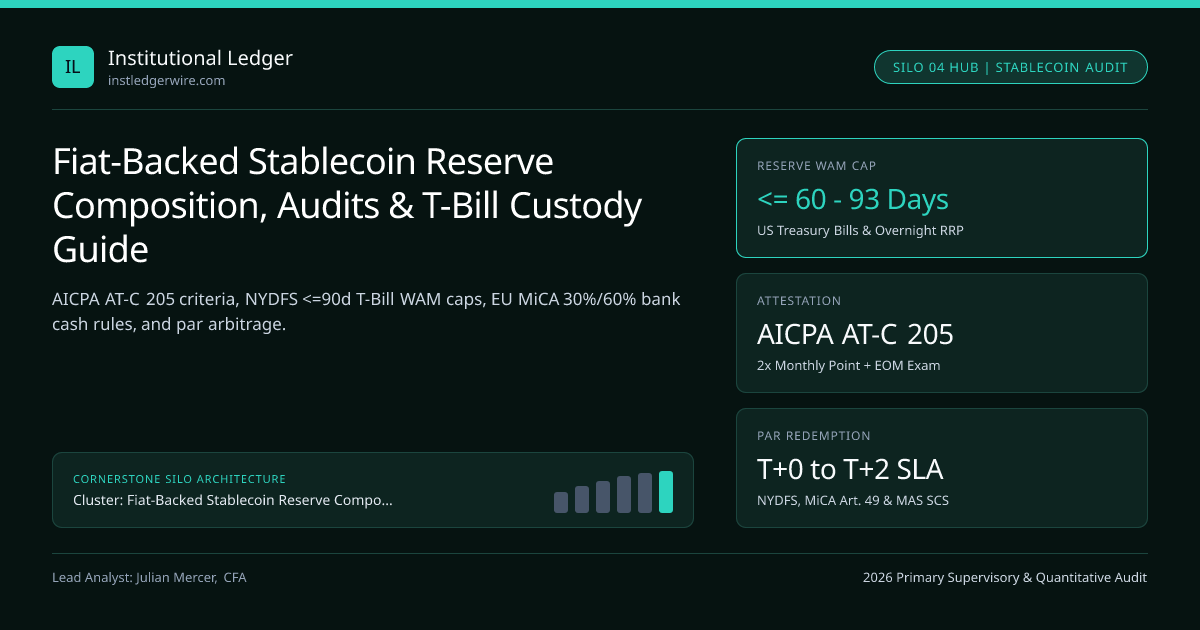
Fiat-Backed Stablecoin Reserve Composition, Audits & T-Bill Custody Guide
Regulated fiat-backed stablecoins settle trillions in annual institutional digital asset volume, anchored by AICPA AT-C 205 attestations, <=93-day US Treasury WAM caps, NYDFS trust rules, and EU MiCA EMT buffers.
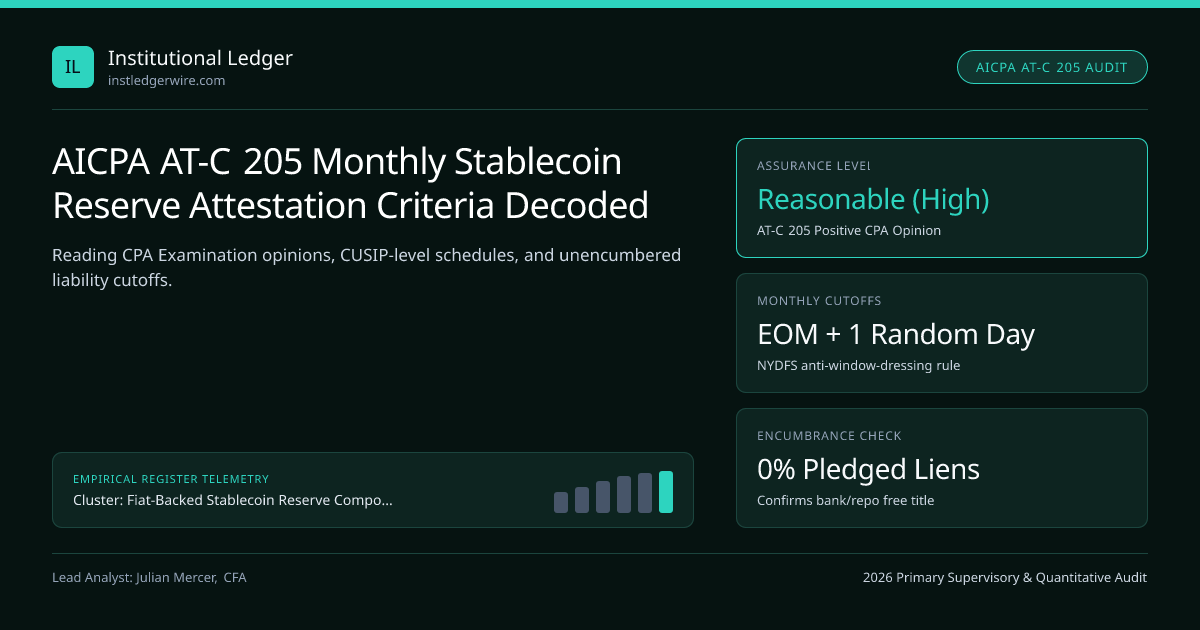
AICPA AT-C 205 Monthly Stablecoin Reserve Attestation Criteria Decoded
Not all "monthly reserve reports" carry CPA audit assurance: institutional treasurers distinguish rigorous AICPA AT-C 205 Examination opinions with unannounced cutoffs from weak AT-C 215 or ISRS 4400 letters.
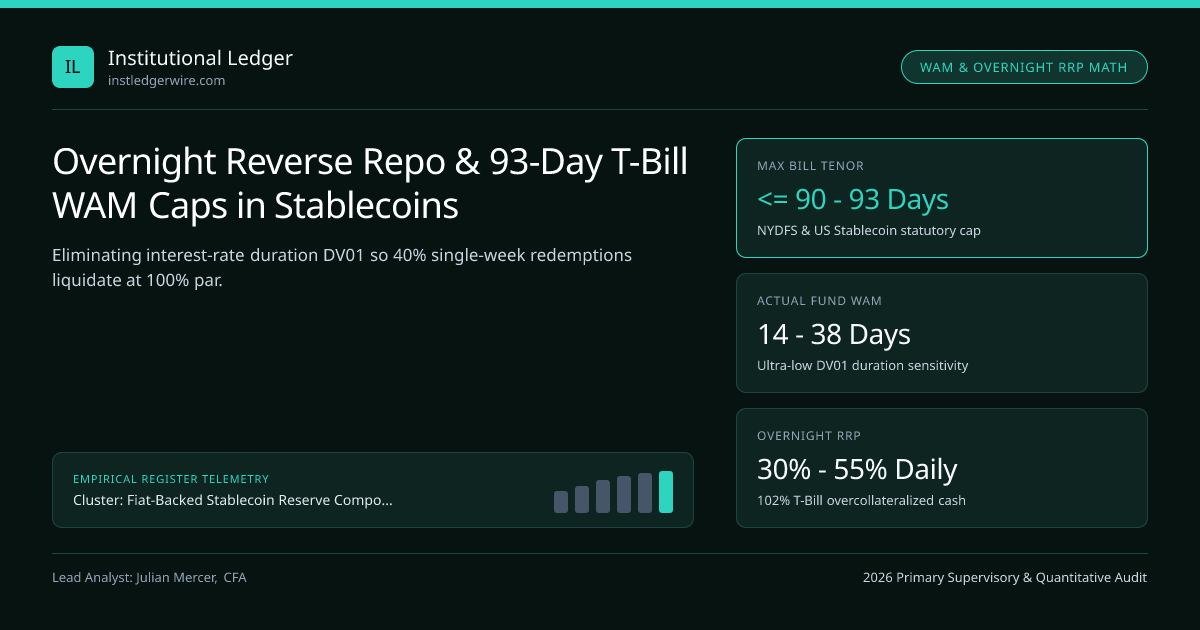
Overnight Reverse Repo & 93-Day T-Bill WAM Caps in Stablecoins
Silicon Valley Bank failed holding 10-year Treasuries and MBS against instant deposits. Regulated stablecoins cap individual T-Bills at <=93 days and anchor instant liquidity in Tri-Party Overnight Reverse Repo.
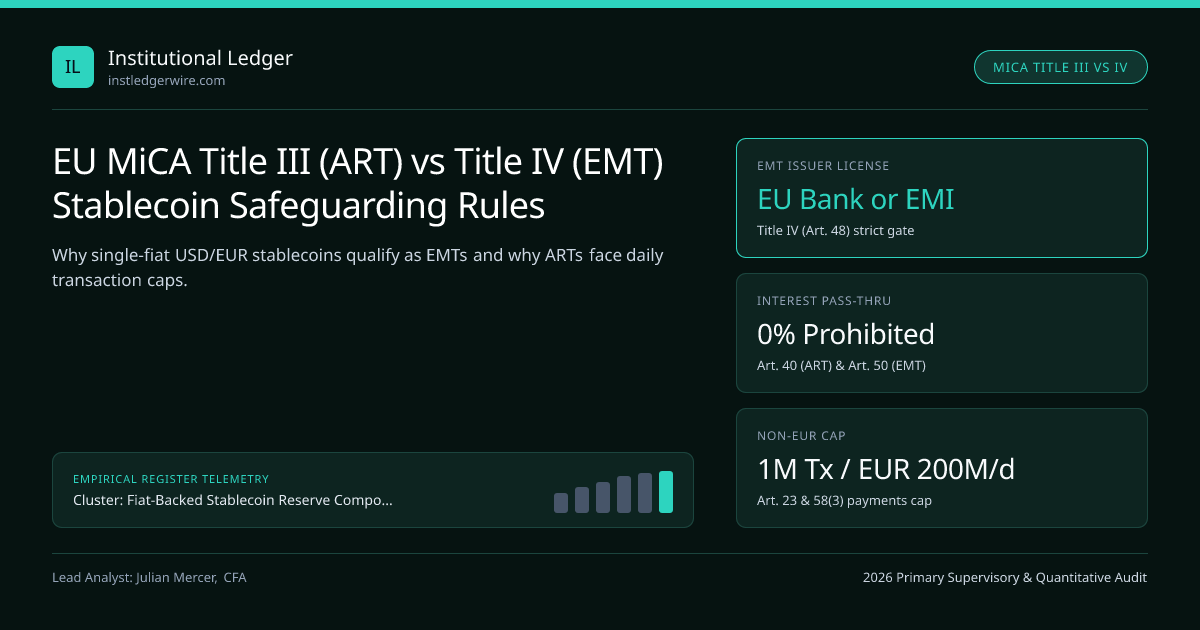
EU MiCA Title III (ART) vs Title IV (EMT) Stablecoin Safeguarding Rules
EU Regulation 2023/1114 (MiCA) splits stablecoins into Title III Asset-Referenced Tokens (ARTs) and Title IV E-Money Tokens (EMTs)—imposing radically different licensing gates, transaction caps, and par rules.
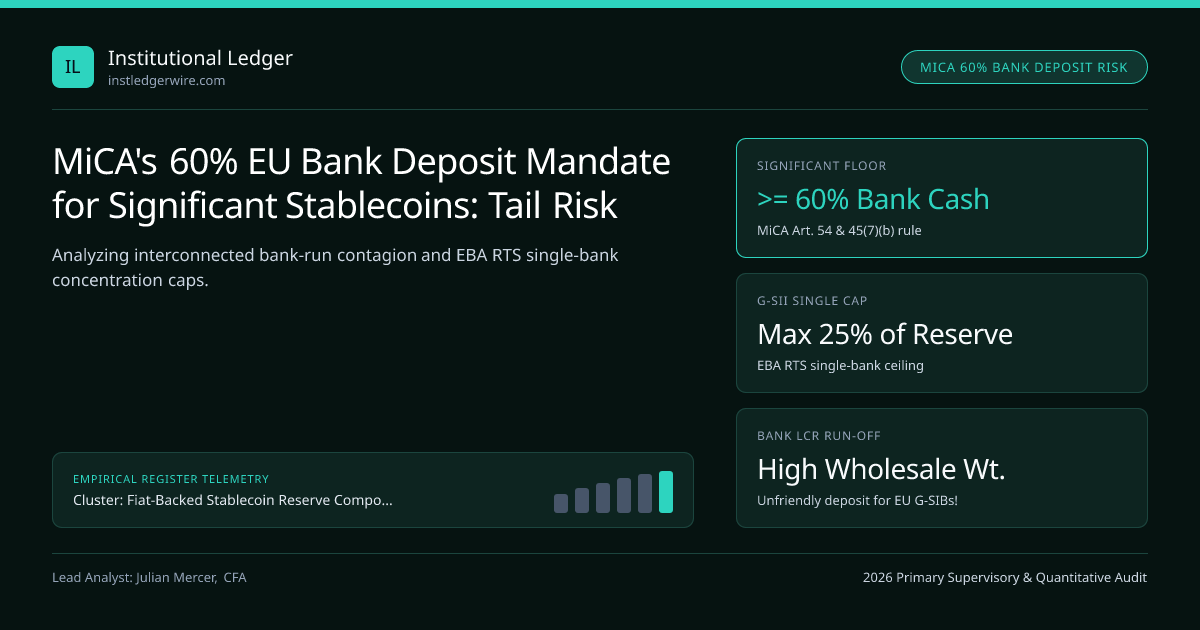
MiCA’s 60% EU Bank Deposit Mandate for Significant Stablecoins: Tail Risk
In a striking regulatory paradox, EU MiCA Articles 36 and 54 force "Significant" E-Money Token issuers to park at least 60% of reserves in fractional-reserve EU bank deposits rather than 100% sovereign bills.
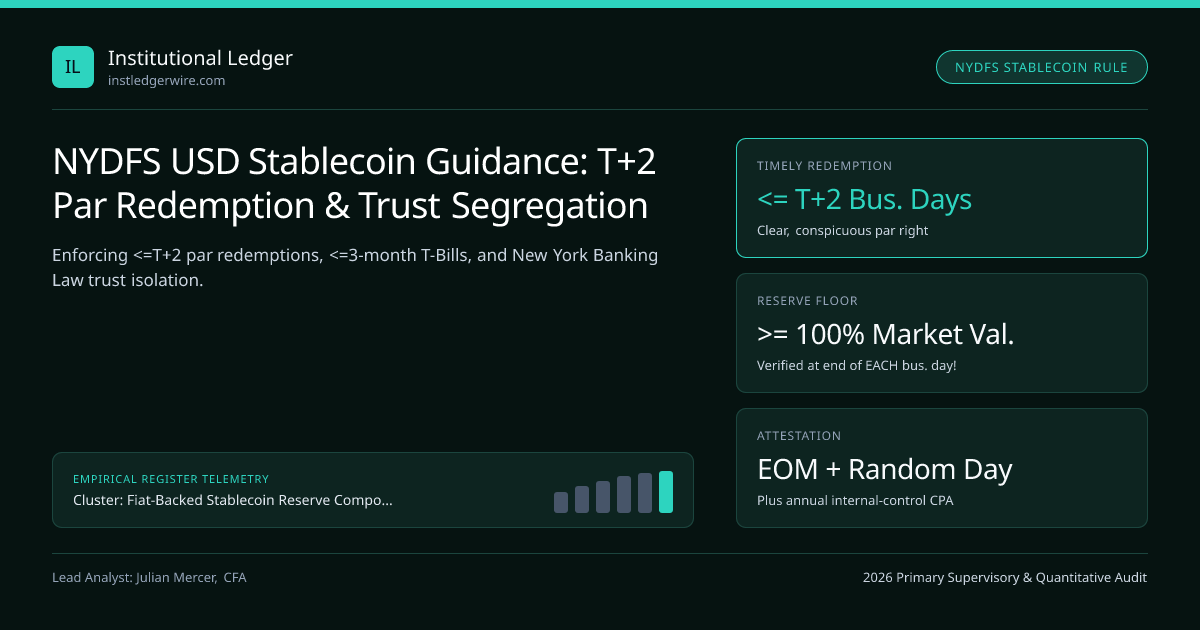
NYDFS USD Stablecoin Guidance: T+2 Par Redemption & Trust Segregation
Long before federal US stablecoin legislation matured, NYDFS’s June 2022 Industry Guidance set the institutional gold standard: 100% end-of-day reserve backing, <=3-month US Treasuries, trust isolation, and T+2 par redemption.
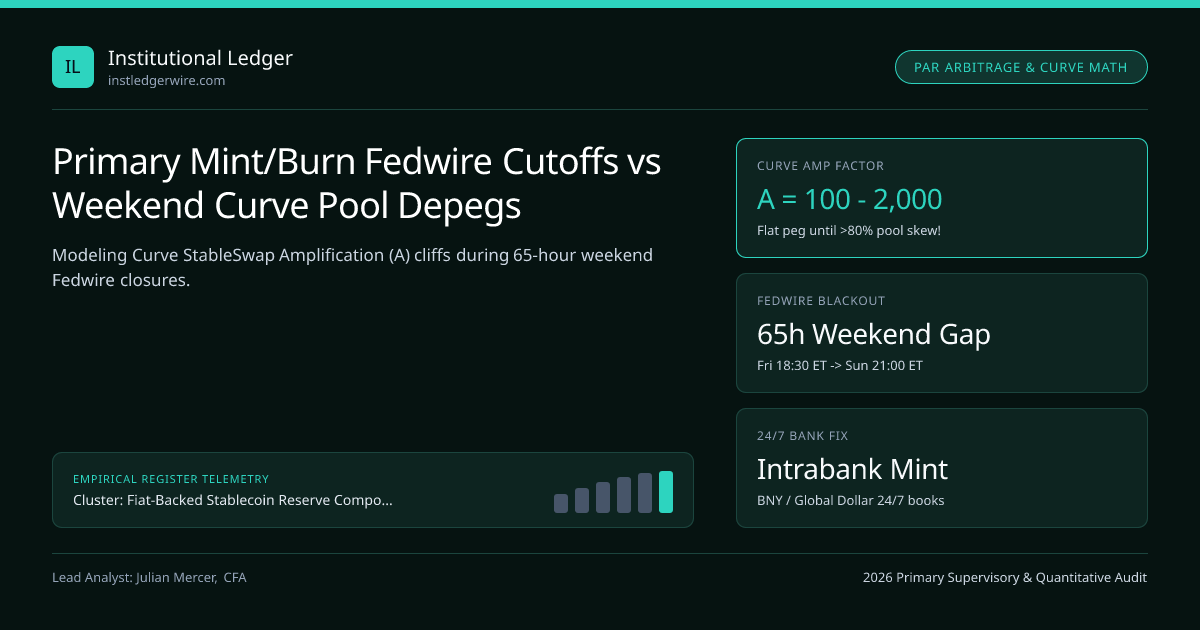
Primary Mint/Burn Fedwire Cutoffs vs Weekend Curve Pool Depegs
Primary stablecoin mint/burn pipes settle at $1.0000 par when US Treasury repo desks run, yet Curve 3pool/USDC-USDT imbalances can push weekend secondary prices off par when banking rails sleep.
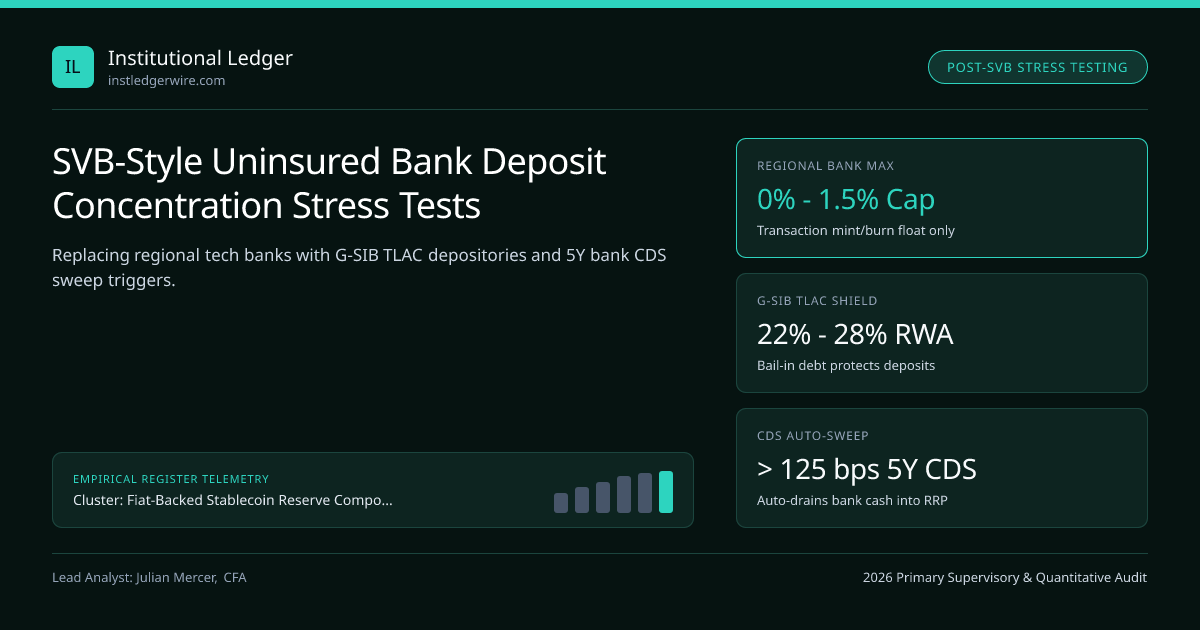
SVB-Style Uninsured Bank Deposit Concentration Stress Tests
March 2023 proved that holding $3.3B in an uninsured regional bank turns a 100%-backed stablecoin into a weekend credit derivative. Modern risk desks stress-test bank CDS spreads and G-SIB TLAC buffers.
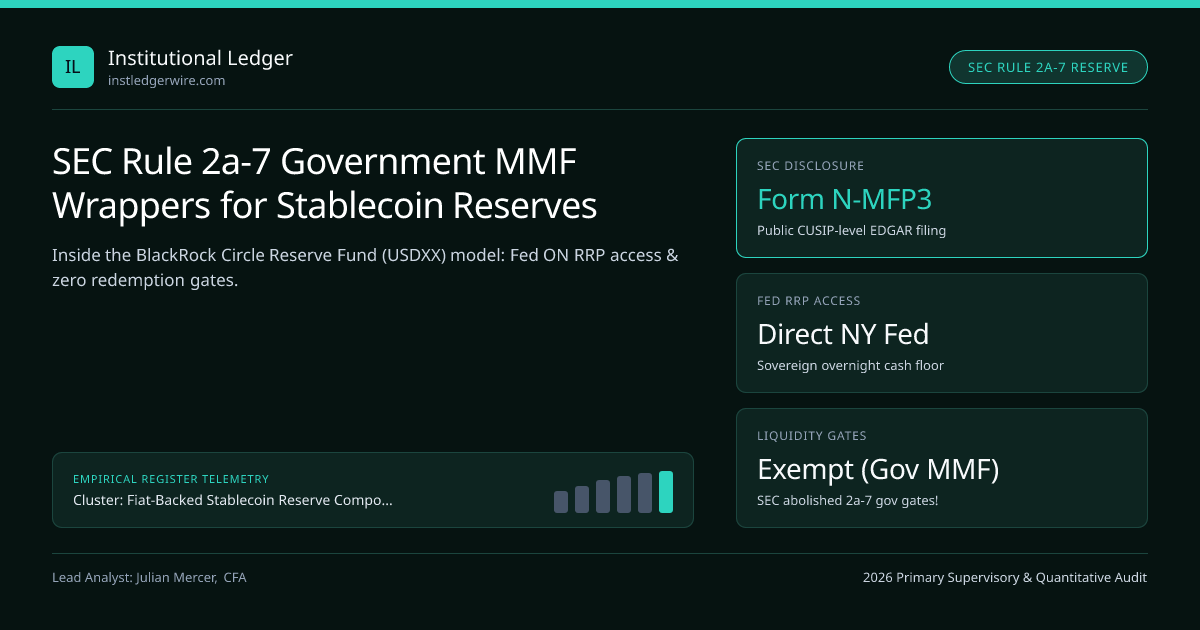
SEC Rule 2a-7 Government MMF Wrappers for Stablecoin Reserves
By housing ~90% of stablecoin reserves inside dedicated SEC-registered 1940 Act Rule 2a-7 Government Money Market Funds, issuers unlock direct NY Fed Overnight RRP access, statutory bankruptcy isolation, and Form N-MFP3 transparency.
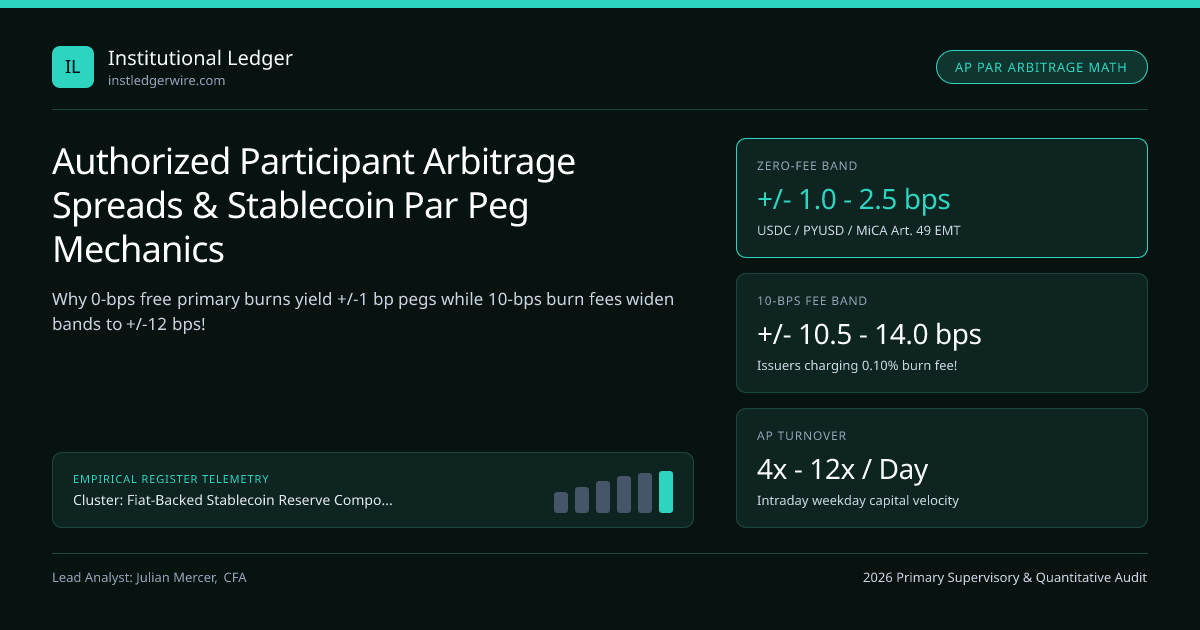
Authorized Participant Arbitrage Spreads & Stablecoin Par Peg Mechanics
Just like ETF Authorized Participants keep SPY and IBIT pinned to NAV, whitelisted OTC market makers enforce stablecoin $1.00 pegs via primary mint/burn arbitrage—bounded by burn fees and capital cost.
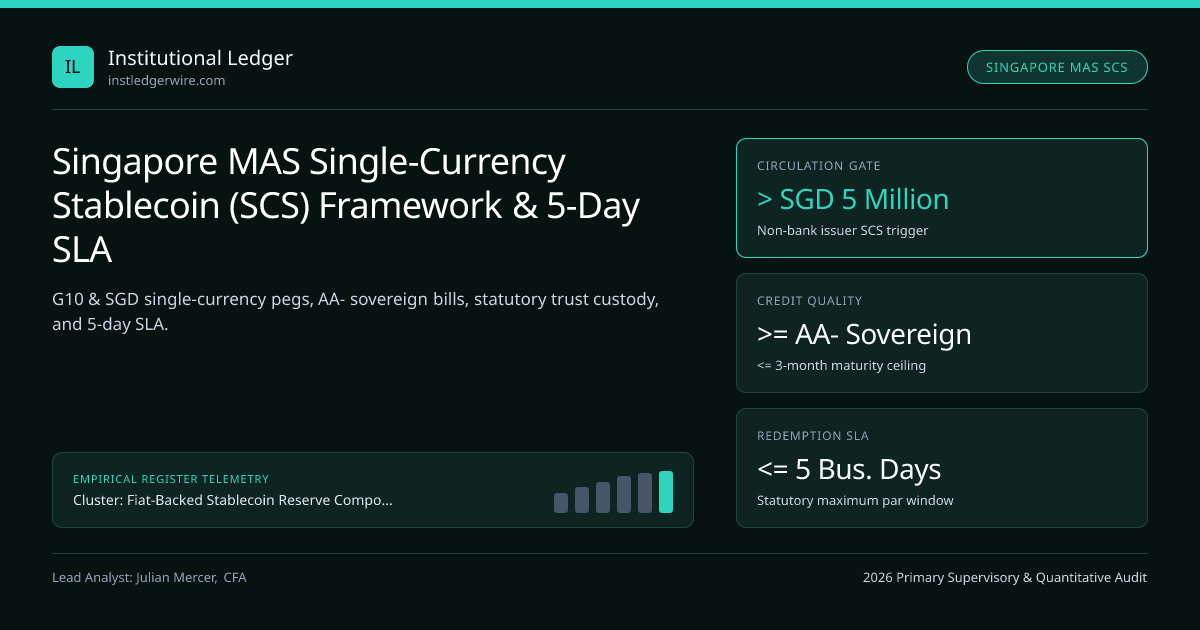
Singapore MAS Single-Currency Stablecoin (SCS) Framework & 5-Day SLA
Singapore’s MAS Single-Currency Stablecoin (SCS) framework creates a voluntary/mandatory high-trust label above SGD 5M circulation, enforcing <=3-month AA- sovereign backing and 5-business-day par redemptions.
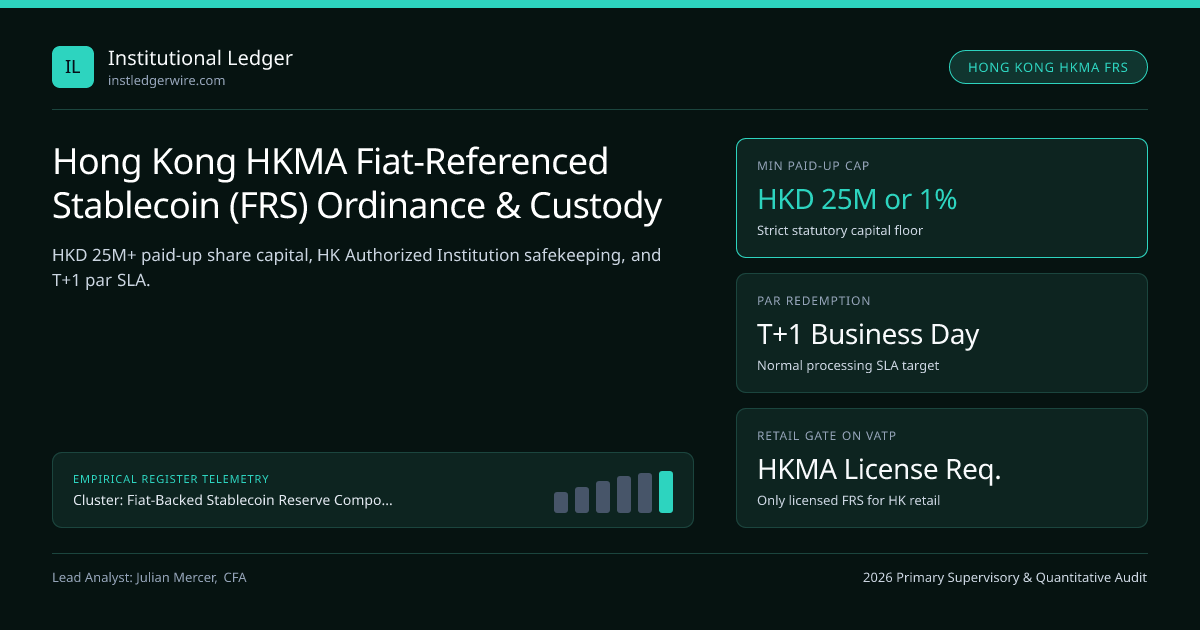
Hong Kong HKMA Fiat-Referenced Stablecoin (FRS) Ordinance & Custody
Enacted via Hong Kong’s Stablecoins Ordinance, the HKMA Fiat-Referenced Stablecoin (FRS) regime enforces HKD 25M paid-up capital, local Hong Kong custody segregation, zero interest bans, and T+1 par redemptions.
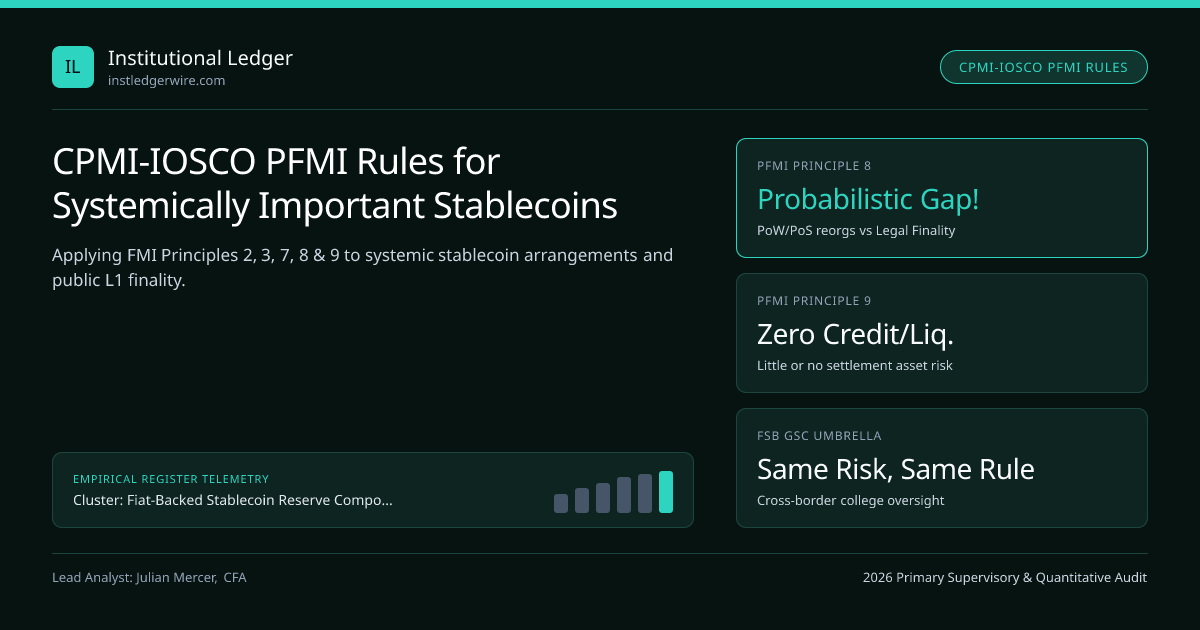
CPMI-IOSCO PFMI Rules for Systemically Important Stablecoins
Once a stablecoin reaches systemic payment or capital-market scale, central banks judge its transfer function under CPMI-IOSCO PFMI Principle 8 (Settlement Finality) and Principle 9 (Money Settlements).
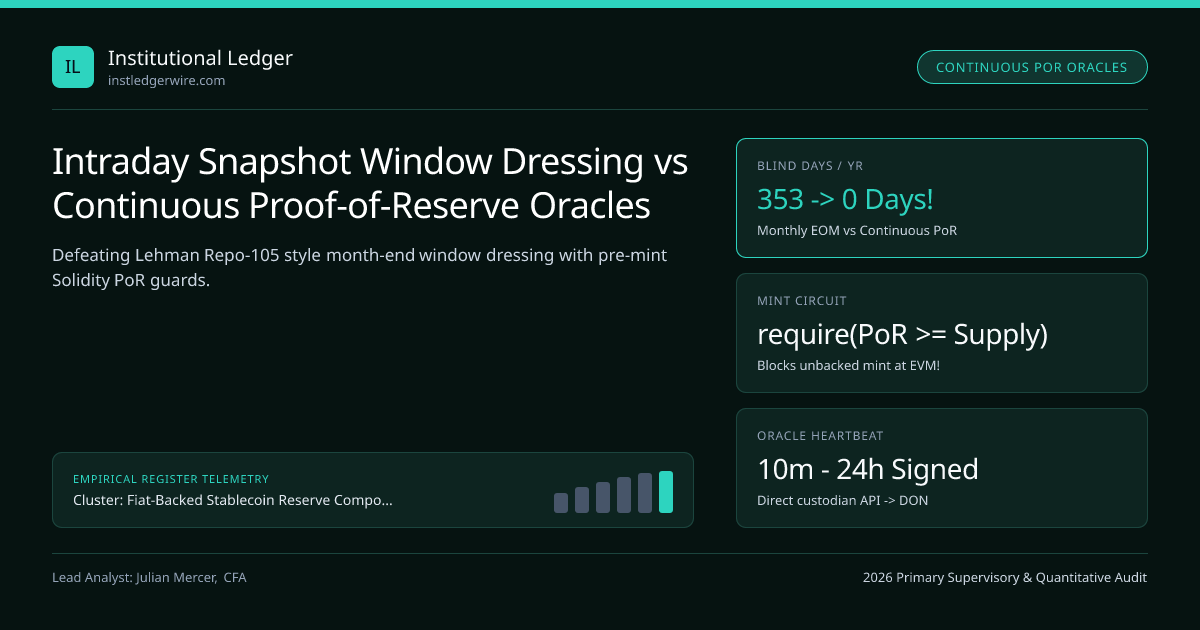
Intraday Snapshot Window Dressing vs Continuous Proof-of-Reserve Oracles
A single predictable 11:59 PM month-end attestation timestamp invites overnight balance-sheet window dressing. Pairing surprise intra-month CPA cutoffs with smart-contract Proof-of-Reserve mint guards seals the gap.
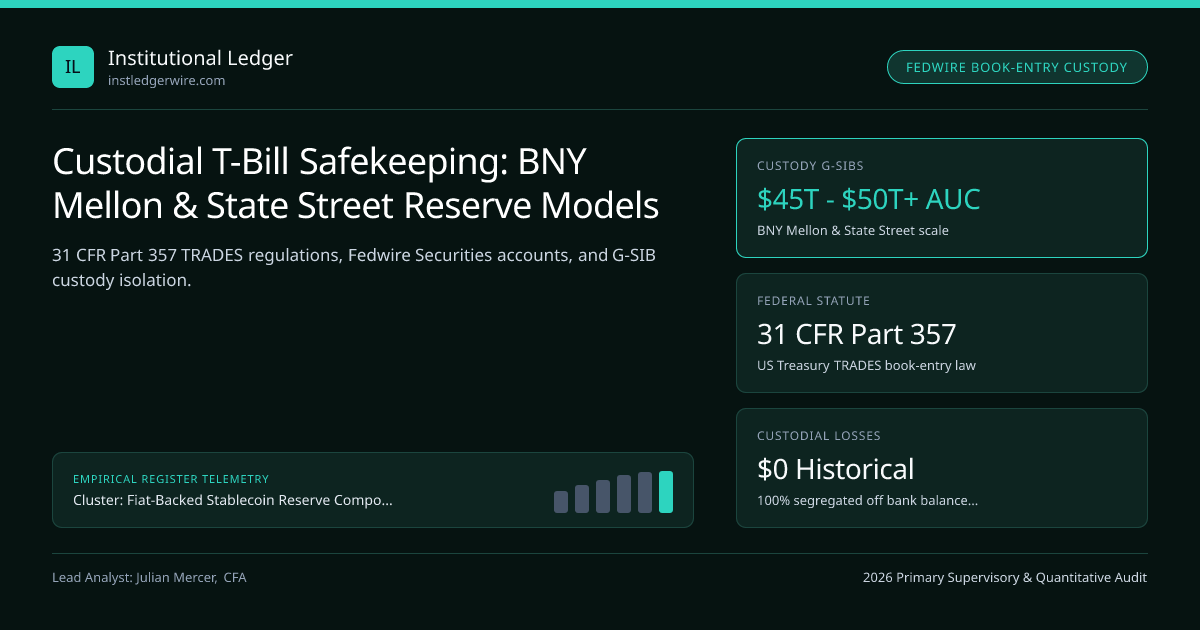
Custodial T-Bill Safekeeping: BNY Mellon & State Street Reserve Models
Behind every Tier-1 USD stablecoin and tokenized RWA fund sits the Fedwire Securities Book-Entry System accessed through G-SIB custody banks—isolating T-Bill CUSIPs via statutory NY UCC Article 8 accounts.
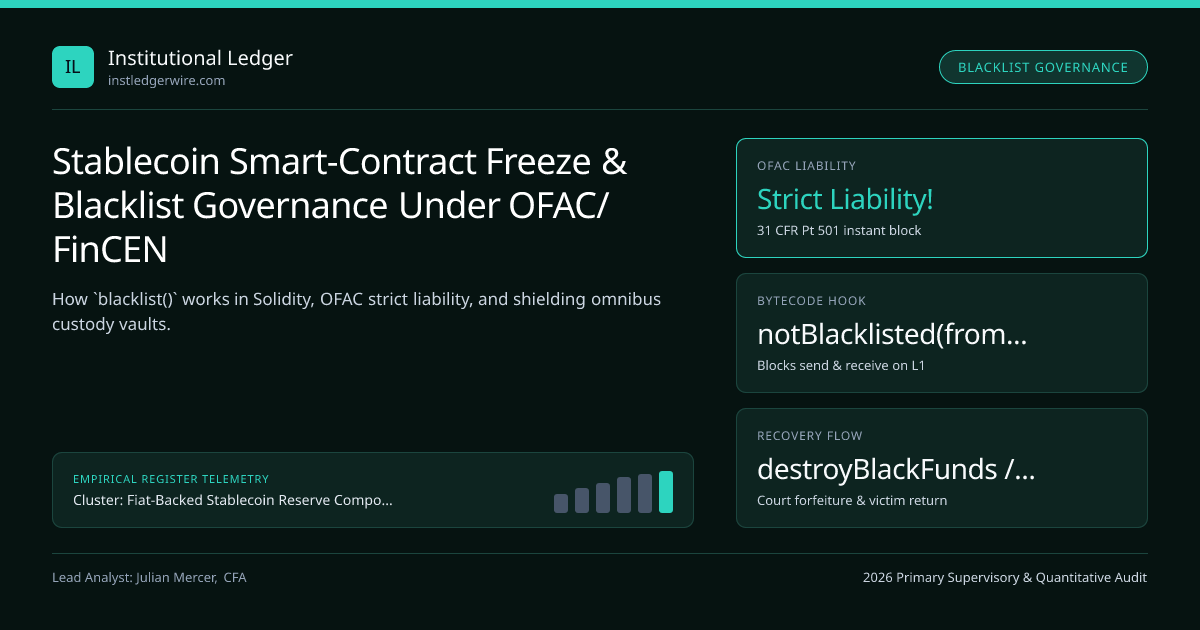
Stablecoin Smart-Contract Freeze & Blacklist Governance Under OFAC/FinCEN
Every major fiat-backed stablecoin embeds administrative blacklist(address) bytecode to enforce OFAC sanctions and law-enforcement freeze orders—creating unique smart-contract contagion risks for DeFi pools and omnibus wallets.
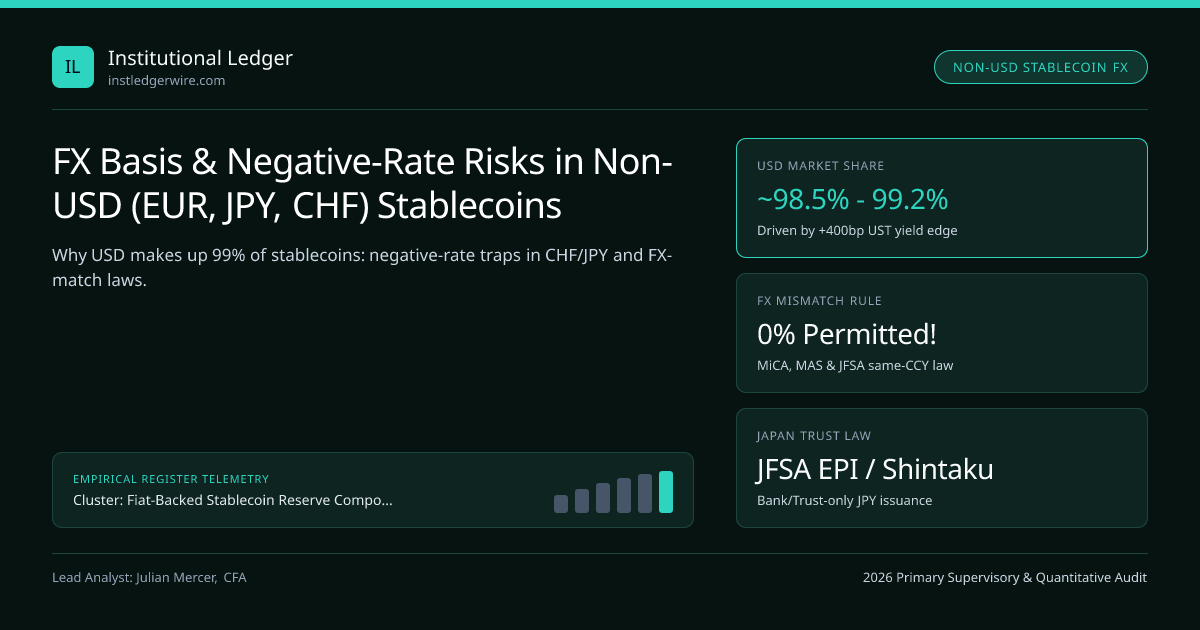
FX Basis & Negative-Rate Risks in Non-USD (EUR, JPY, CHF) Stablecoins
USD stablecoins thrive effortlessly on 4%+ US Treasury yields, whereas JPY, CHF, and EUR stablecoin issuers navigate ultra-low or negative sovereign bill yields, banking safekeeping fees, and strict FX match mandates.
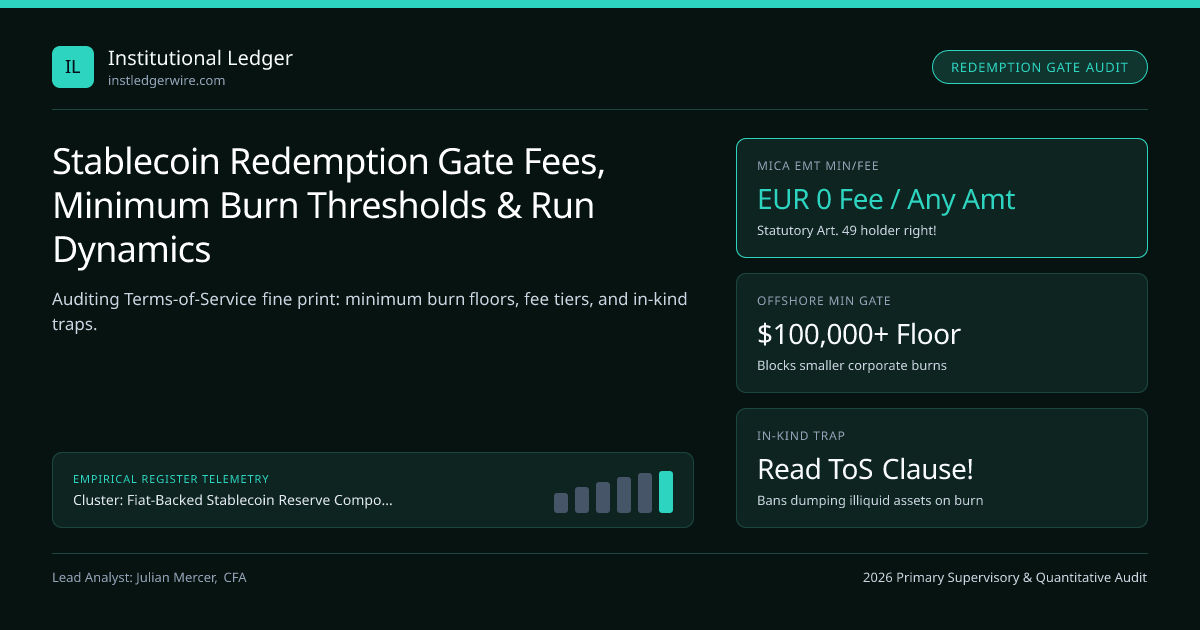
Stablecoin Redemption Gate Fees, Minimum Burn Thresholds & Run Dynamics
Hidden deep inside stablecoin Terms of Service sit the clauses that govern crisis survival: $100,000 minimum burn gates, tiered redemption fees, T+5 delay rights, and offshore in-kind asset distribution disclaimers.
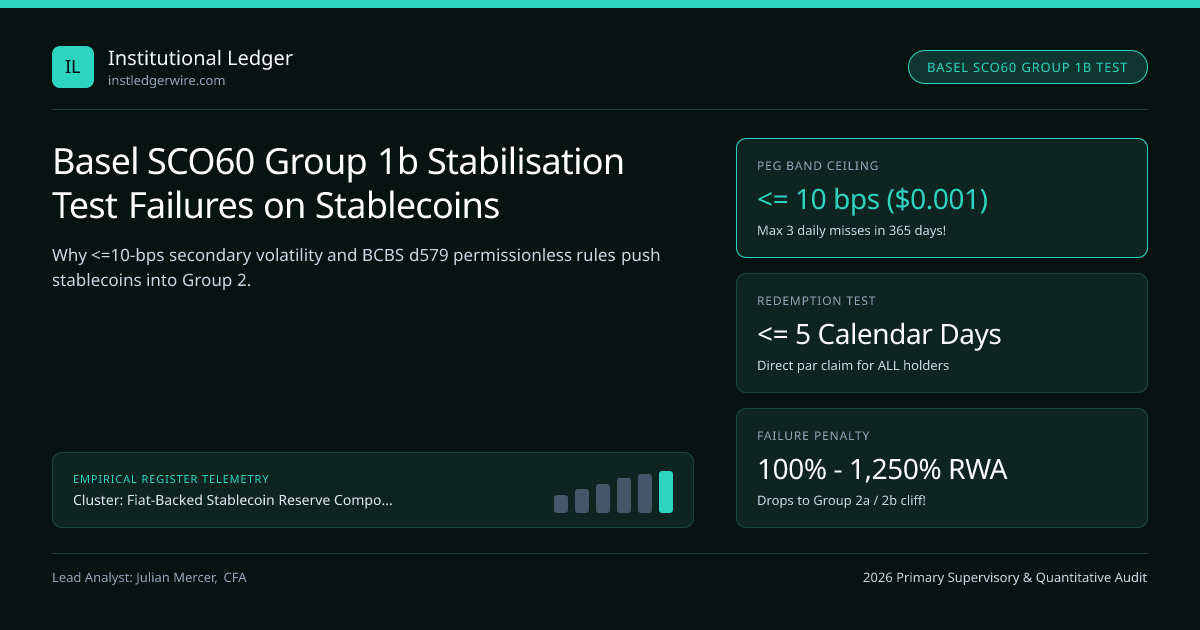
Basel SCO60 Group 1b Stabilisation Test Failures on Stablecoins
Basel III SCO60 requires a stablecoin to pass BOTH a <=10-bps daily peg-deviation test (<=3 breaches in 12 months) AND a direct legal issuer redemption test—tripping almost every public-chain stablecoin into Group 2!
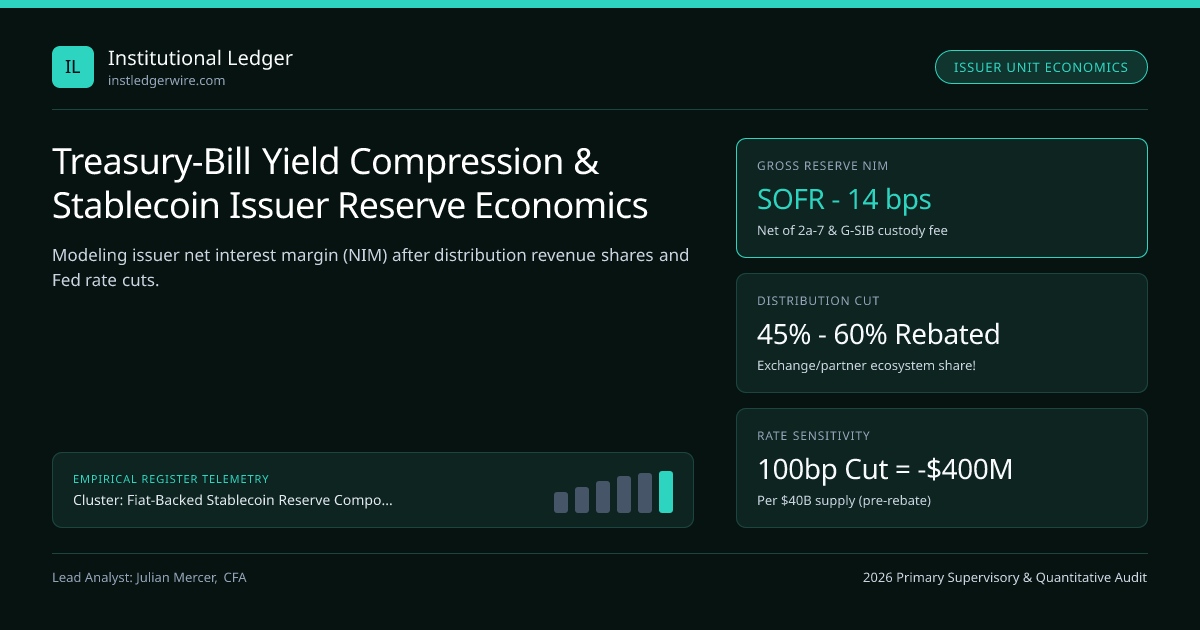
Treasury-Bill Yield Compression & Stablecoin Issuer Reserve Economics
At 4.5% Fed funds, $40B+ stablecoin issuers print billions in gross T-Bill interest—often rebating 50% to distribution exchanges. Modeling Fed rate-cut cycles exposes severe operating-margin cliffs below 1.75%!